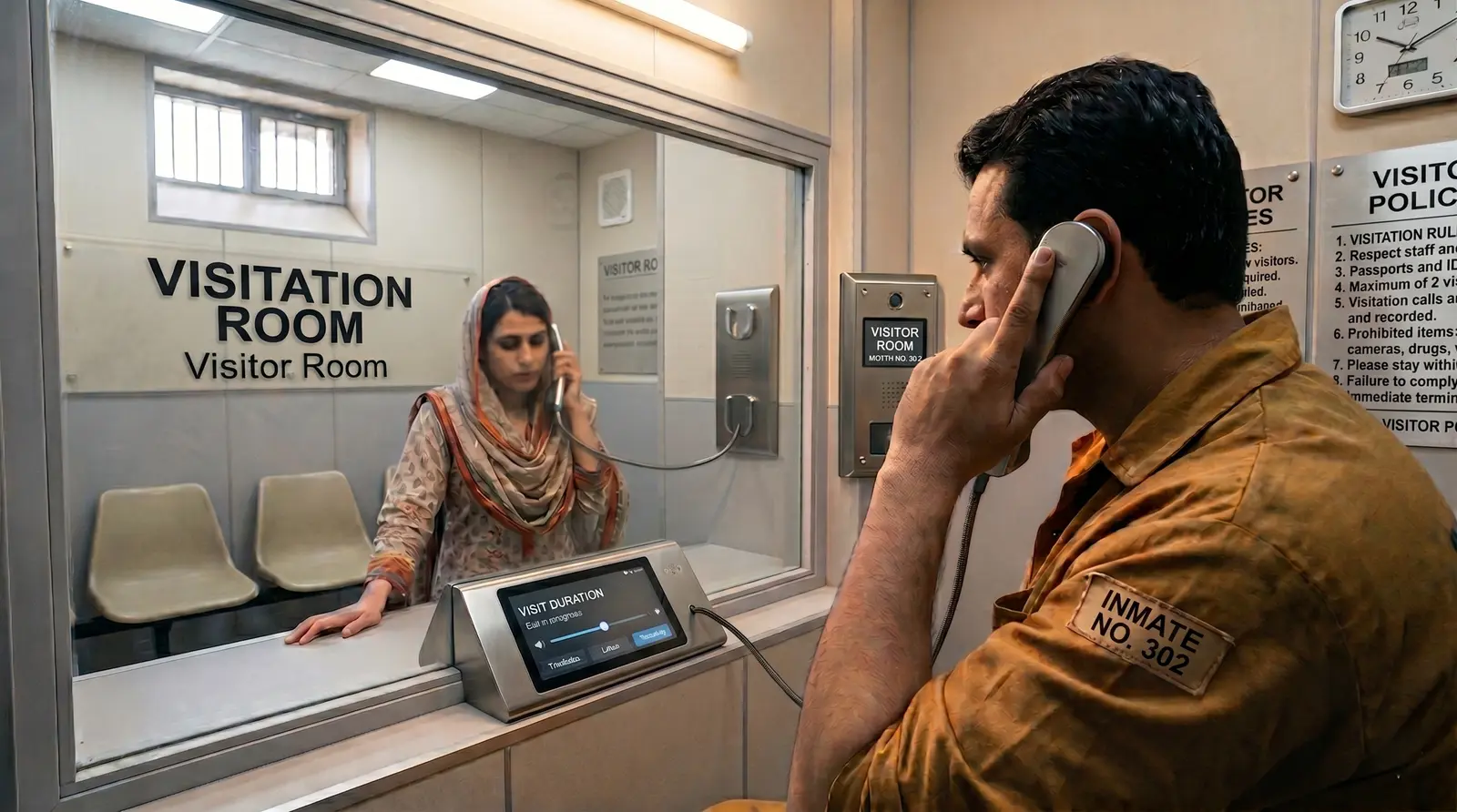

Prison communication solutions
Mission-Critical Communication for Correctional Facilities
Officer safety, inmate welfare and operational integrity on one IP audio platform.
01 · The operational stakes
Legacy prison communication systems are failing
Four operational risks every correctional facility faces today
Officer & inmate safety gaps
Dead zones and unanswered calls delay response to incidents.
Escalating lifecycle cost
Ageing analogue systems, proprietary wiring and scarce spares.
Audit & compliance exposure
No call logs, timestamps or VMS links to evidence response.
Cyber & operational risk
Flat networks, default passwords, no encryption or audit trail.
Result: missed incidents, slower response, growing replacement cost, and rising regulatory scrutiny.
Why audio is control
The intercom is not a feature — it is the facility
Every cell call, announcement and visitor check depends on clear, fast, accountable two-way audio.
When audio fails, three things fail at once:
Officer safety — response times stretch, situations escalate
Accountability — missed calls, no recording, no audit trail
Legal exposure — duty-of-care claims, regulator findings


02 · Engineering foundations
Built for environments where audio cannot fail
Intercom and PA that stay intelligible under noise and continuous duty. Supplied, installed and supported by Faraz Sandhal Enterprises Pvt. Ltd. as authorised partner and integrator.
552 stations
on a single IP node
One platform
from cell to control room
Critical infrastructure
Communication is critical infrastructure
Four mission-critical jobs the system must perform every shift, every day
Cell monitoring & response
Two-way audio in every cell, with scream, assault and tamper alarms.
Visitor & access control
Video and audio verification at every gate and visitor room.
Staff coordination
Group calls and priority paging across blocks.
Emergency PA & evacuation
Zoned voice alarm, clear under noise, with manual override.
When any of these four fails, the facility is unsafe — for staff, for inmates, for the public.
03 · Unified platform & architecture
System architecture
IP backbone with ICX-AlphaCom core, distributed stations, and open integrations
Field stations
Cell intercoms
VR3G-1 / VR3G-1P / IPVRS-1
Visitor & access
TMIV-1+ / TCIV+
Operator stations
IP Flush Master / ITSV-5
PA / Voice Alarm
IP speakers + amplifiers
ICX-AlphaCom
Server / Core
- Up to 552 stations per node
- SIP • IPv6 • ONVIF
- SHA-256 secured
- Dual-image redundancy
Integrations
VMS
ONVIF • Milestone • Genetec
Access control
Door release • Badge events
Prison management
OMS / SIEM • Log forwarding
One unified platform — open standards (SIP, ONVIF, IPv6) ensure no vendor lock-in
The platform core
ICX-AlphaCom platform
The intelligent communication exchange at the heart of every installation
stations / node
Single-rack scale for an entire facility
software images
Boot redundancy — never strand a node
secure boot
Hardware Root of Trust + signed firmware
SIP • IPv6 • ONVIF
No vendor lock-in, future-proof network
Engineered for the clarity, redundancy and security life-safety audio needs.
Works alongside existing AlphaCom XE servers and analogue stations. No rip-and-replace.
04 · The hero hardware
Cell-block hardware
Three station options engineered for life inside the cell.
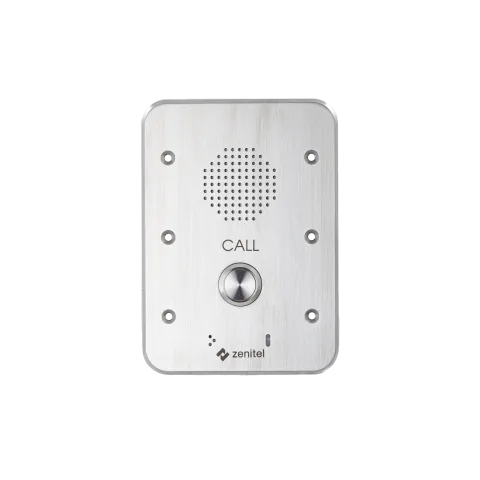
VR3G-1
Vandal Resistant Station
- Enclosure
- 2.5mm steel front
- Protection
- IP66 • IK10
- Alarms
- Tamper
- Features
- Anti-ligature button
- Power / temp
- PoE • –40 °C to +70 °C

VR3G-1P
Vandal Resistant Station w/ Handset
- Enclosure
- 3mm steel front
- Protection
- IP66 • IK10
- Alarms
- Tamper • Scream • Assault
- Features
- Bed light • Music ch.
- Power / temp
- PoE • –40 °C to +70 °C

IPVRS-1
IP Vandal Resistant Speaker
- Enclosure
- Stainless steel
- Protection
- IP65 • IK09
- Alarms
- Tamper • Piezo self-test
- Features
- Anti-ligature design
- Power / temp
- PoE • –40 °C to +70 °C
All cell-block stations: water-resistant • sensor buttons • microphone/speaker protection • shipped pre-configured
Lifecycle cost
Vandal resistance is a financial decision
A 10-year operating cost, not just a hardware spec.
Consumer-grade
Typical field life
12–24 months
Replacements / 10 yr
5–8 cycles
Operational exposure
Frequent downtime
Standard hardened
Typical field life
3–5 years
Replacements / 10 yr
2–3 cycles
Operational exposure
Periodic downtime
VR3G family(manufacturer-rated)
Typical field life
10+ years
Replacements / 10 yr
Designed for 0–1
Operational exposure
Continuous service
The unit-cost premium for hardened hardware is recovered in the first replacement cycle avoided.
Intelligibility
Audio under stress — where most systems fail
Intelligible when it matters most.
- 01
Shouted, distorted speech
- 02
Background noise & reverb
- 03
Multiple voices, one channel
- 04
Long, sustained use
Illustration: speech emerging from cell-block noise as active noise cancellation and AGC take effect.
How the platform is engineered for it
Active noise cancellation and AGC — Levels raised voices without clipping or distortion.
HD wideband voice + echo suppression — Reverb and hard surfaces don’t garble the call.
Visitor & access points
HD video intercoms at lobby, sally ports, and visitation rooms

TMIV-1+
HD video intercom — vandal-resistant
- Video
- 1080p HD camera, wide-angle
- Audio
- Full-duplex, noise-canceling
- Enclosure
- Stainless steel, IK10
- Use
- Lobby, visitation, sally ports
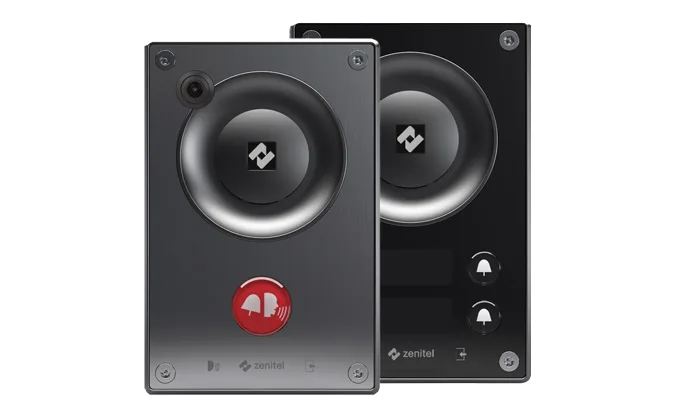
TCIV+
Compact video door station
- Video
- 720p w/ low-light mode
- Audio
- Echo-cancellation
- Enclosure
- Flush or surface mount
- Use
- Staff entrances, gates
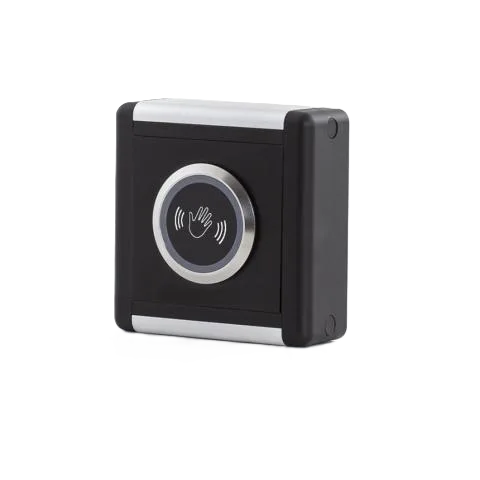
Touchless
Sensor call button — hygienic
- Input
- Proximity sensor
- Audio
- Wideband full-duplex
- Enclosure
- Sealed, IP66
- Use
- Medical, high-traffic
Integrations: ONVIF Profile S/T • Milestone XProtect • Genetec • Door release via access control
Control room & PA
Control room & facility-wide audio
Operator stations for officers, PA / Voice Alarm for everyone else
Control room
Operator stations
Dispatcher-grade hardware for officers
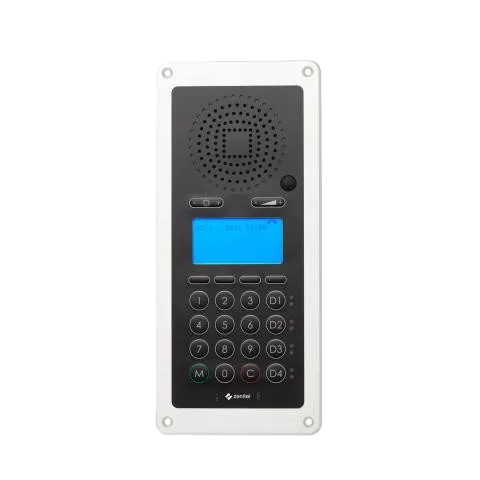
IP Flush Master Station
Flush-mount console • PoE • PTT + group calls

ITSV-5 Desktop Station
5-button programmable • HD audio • SIP
Priority override • emergency call routing • call-queue management
Facility-wide
PA / Voice Alarm
IP speakers + amplifiers, voice-guided evac

IP Ceiling & Horn Speakers
Built-in DSP • supervision • zone routing
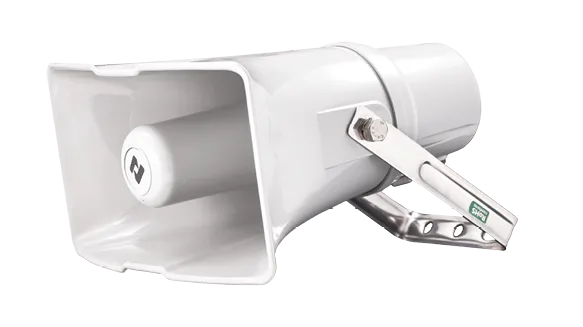
Voice Alarm to EN 54-16
Pre-recorded evac messages • supervised lines
Lockdown announce • multi-zone PA • shift change broadcasts
One platform — same intercoms, same operator console, same PA — fully integrated end-to-end
Products in operation
Field Demo — Products in Operation
- 01Cell-block communication (VR3G-1 · VR3G-1P · IPVRS-1)
- 02Visitor & access control (TMIV-1+ · TCIV+ · Touchless)
- 03Control room operations (IP Flush Master · ITSV-5)
- 04Inmate visitation room (TCIV+)
- 05Facility-wide PA & voice alarm
05 · Operational scenarios
A day on the wing — three scenarios
Routine operations and the moments that matter.
Situation
Press the cell-block call button. Hands-free, no handset to damage.
What the platform does
Routes to officer station with location ID. Logged with timestamp and audio.
Outcome
Verified record. No disputed event.
Security & compliance
Built for government networks — secure and certified
Procurement requirements, built in.
Cybersecurity
Defence in depth, silicon to endpoint
- Secure boot and signed firmware on every device
- TLS / SRTP encryption end-to-end across the platform
- 802.1X authentication and role-based access control
- No external dependencies — runs on isolated networks
- Continuous security advisories and patch programme
Compliance & standards
Procurement-ready standards
- IEC 60268-16speech transmission index for intelligibility
- EN 54-16voice alarm for life-safety integration
- IP66 / IK10hardened ratings on cell-block stations
- TLS / SRTPencryption across the platform
- 802.1Xnetwork access control
Why it works
Why the platform works in corrections
Five reasons teams standardise on it.
Audio engineered for chaos
Speech intelligibility tested at high SPL.
Scale on a single node
552 stations per server, multi-site federation.
Hardened cybersecurity
Root of Trust, signed firmware, SHA-256, 802.1X.
Truly open
SIP, ONVIF, IPv6, Milestone and Genetec. No lock-in.
Retrofit ready
Runs on existing Cat5/Cat6 and legacy AlphaCom.

06 · De-risked rollout & next steps
A de-risked rollout
Phased, partner-led, fully supported.
- 1
Phase 01
Design & pilot
Reference design and a pilot wing, tested against your criteria.
- 2
Phase 02
Full deployment
Wing by wing. No cell block goes offline.
- 3
Phase 03
Integration
Video, access control and incident systems in one operator view.
- 4
Phase 04
Lifecycle support
Local first response, firmware and security updates.
Recommendation
Recommendation & next steps
Prove it on your facility first.
- 1
Weeks 1–3
Discovery
Site walk, network audit, station count, integration scope.
- 2
Weeks 4–10
Pilot block
One cell block end to end: server, 20–40 stations, console.
- 3
Weeks 11+
Facility rollout
Wing by wing on existing cabling, with training, handover and ongoing support.
Let’s scope your pilot